part one: the formation
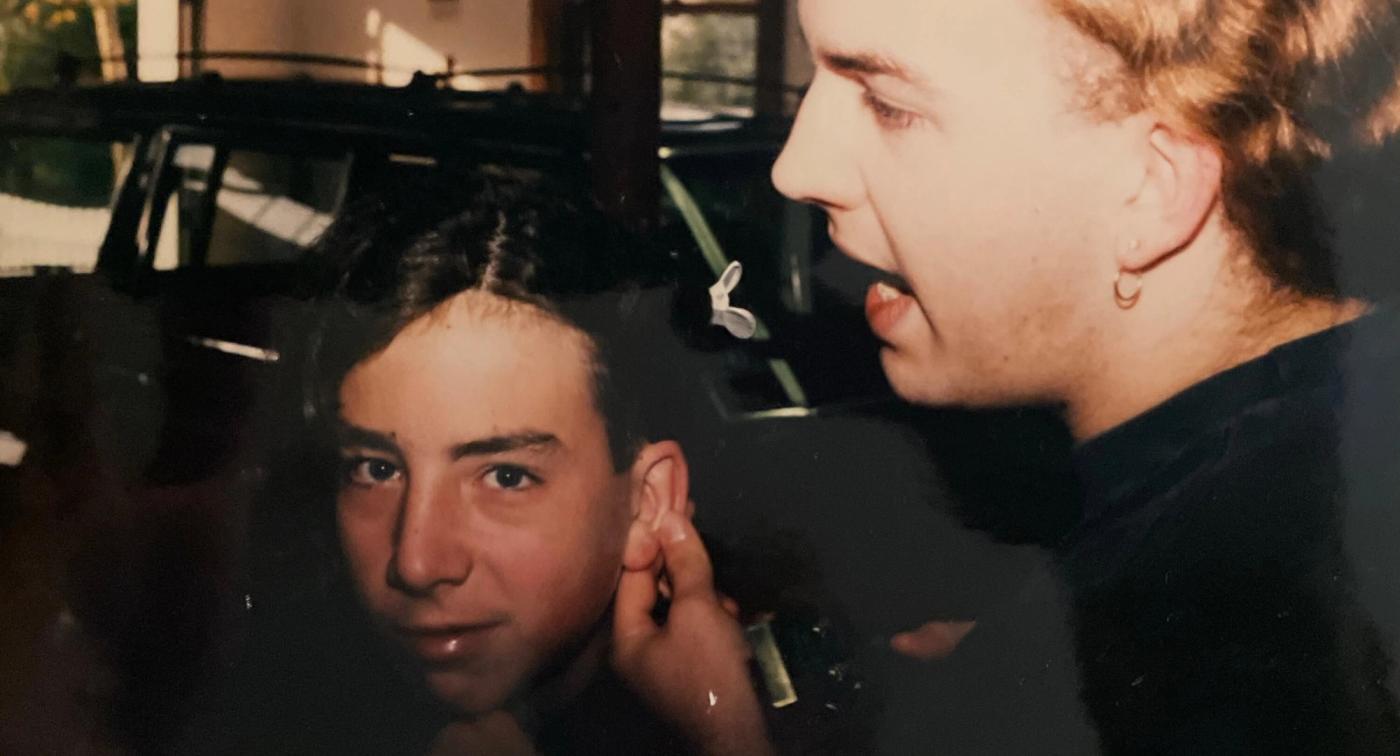
It started with my older brother. The music I listened to, the guitar I picked up, the bands I got obsessed with, all of it traces back to him. That's what younger siblings do. You follow, you emulate, you try on your older sibling's world until you find your own groove in the record, the beat and rhythm that excites and fires your synapses. And eventually you do find them. The music I started writing didn't sound like his, and it enveloped every aspect of the person I was becoming. I absolutely loved it. The interests I developed eventually spread far and wide from where he'd pointed me. I was forming something that was entirely mine.
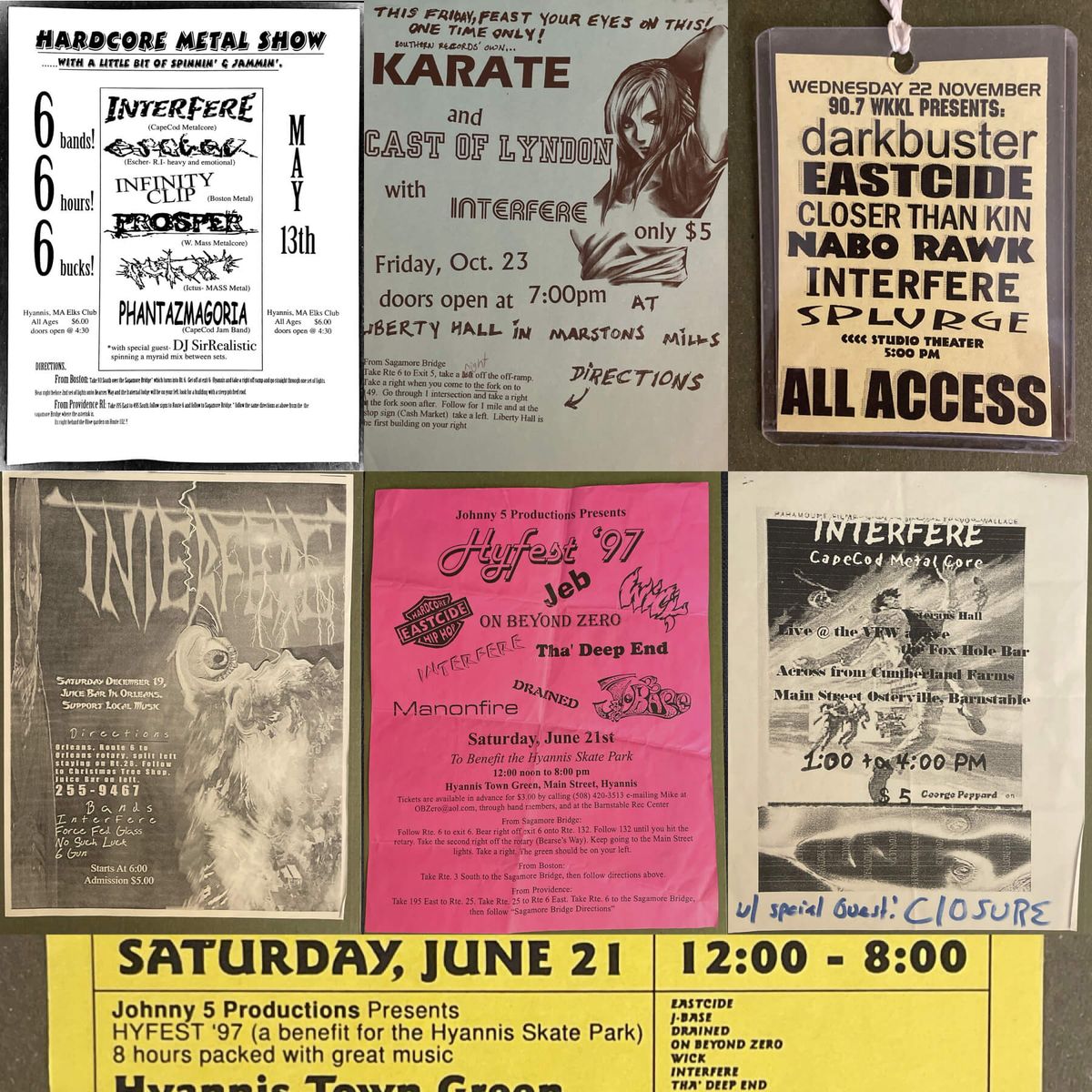
By high school it was pure creative immersion. Writing music, practicing, finding the right bandmates, designing flyers, playing shows. My best friend and I started it, just the two of us first in 8th grade, then found a drummer in our sophomore year who literally played to his own beat, an astounding fact when we would sometimes lean into one riff for ten minutes straight. We had to part ways, even though he became a very close friend through music, a thread that has continued through my entire life. Then by some stroke of luck we found out a kid from a totally different friend group at our school played drums. He was intense, a real fireball. He took whatever was burning inside him and aimed it directly at his kit, hard, and it was exactly what we needed. We formed the band, Interfere, which would be my focus for the remainder of high school and the first few years of college. We became a tight brotherhood.
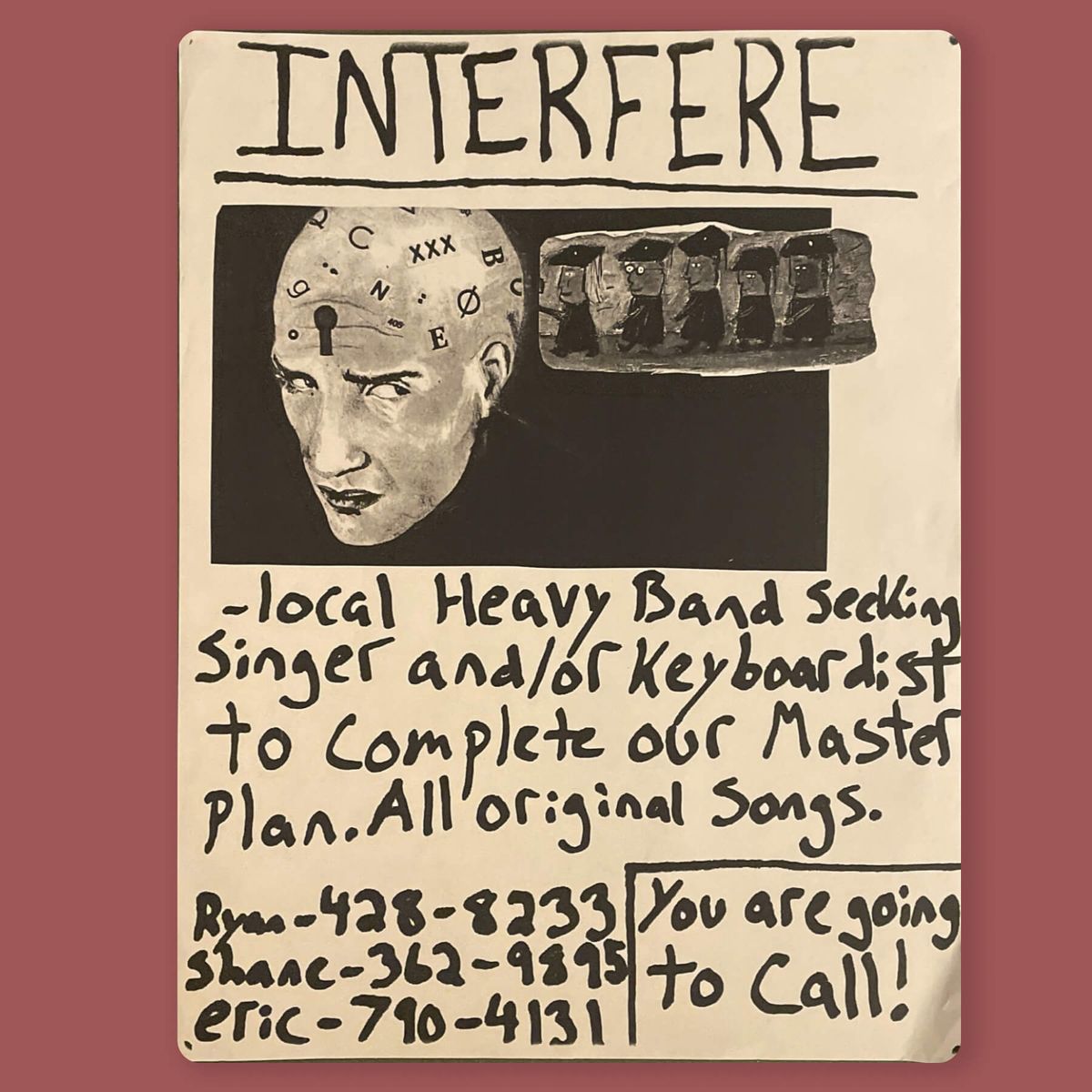
We needed a singer, so we ran flyers across Cape Cod and held tryouts. One guy almost worked but had a breakdown, talk about the wild energy that he brought. It was exciting to hear the emotion and fierceness of our music come out in a voice. Another fit the part but fell apart during a big show, womp womp. Then a friend of ours said he wanted to try, and we looked at each other like, you? Really? But he worked at it, and eventually it clicked. We had a band. It was a really cool time. We played for hours and hours every week in my parents' basement. He carried us through the rest of high school and into my first year at Northeastern.
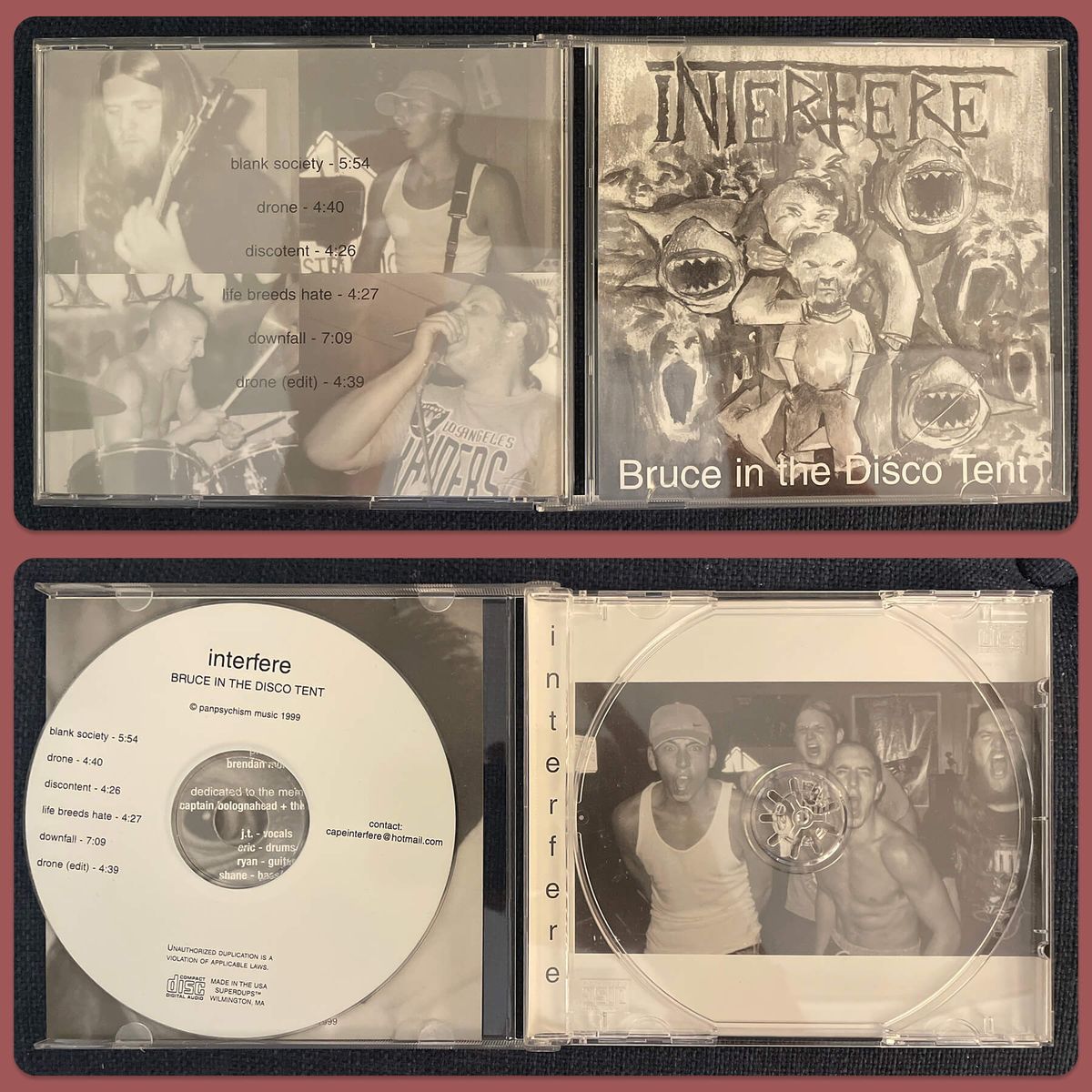
But somewhere in my freshman year of college we started feeling like we wanted more. More range, more scope, more ambition in the sound. Which meant we needed a singer who could take us there. We found one. And almost immediately everything got tighter. The songs opened up. For a stretch it genuinely felt like we were becoming the band we had always wanted to be.
What I didn't fully register at the time was how many things I was running simultaneously. I was writing the music. Booking the shows. Designing the flyers. Scouring the internet for like-minded bands across New England to connect with. None of it felt like work. It felt like what needed to happen, so I did it. All of it, at once. And I felt completely alive doing it.
College is when the operational layer appeared. I was at Northeastern in a competitive dual major program linking Music Technology with Multimedia Studies, a small studio track that brought together people from graphic design, animation, game design, and web development and ran us as a team for four years. It was the right place for a brain like mine. It let me lean into all of it at once.
In my second year I found out I could do an experiential co-op instead of a traditional internship. So I wrote a proposal: record an EP, build a website, produce a PR kit, play five shows, and produce a final paper highlighting the process, the best and the worst. It was accepted. That summer, Interfere was firing on all cylinders. We had the chops, the drive, and the blind naivety that only a group of 20-year-olds could hold. I just didn't have language yet for what I was actually doing, which was running a small creative operation from the inside out.
That fall the rest of the band joined me in Boston. The bassist and singer enrolled in a two-year recording engineering program. The drummer took construction work with his uncle. We started getting shows in the city, but something had quietly shifted.
Boston had a serious music scene, full of genuinely great bands, and we wanted, with all our might, to get to the next level. But our singer had started to get lost in a new group of friends he met at his school. His eagerness waned and eventually we had to let him go. We found a new singer who had been in a fairly well-known band, renamed ourselves Torch the Arsonist, and started writing more complex material. But our drummer struggled to keep pace with the new direction, and the tension that created never fully resolved. We recorded a four-song EP that absolutely ripped. We never played a single show under that name, man, what a shame.
By my fifth and final year, I had started playing with some friends of friends from Berklee. They had grand ideas about moving to Athens, Georgia and building something real. I smiled and nodded. But internally I already knew I was graduating and moving forward, and that the version of me who believed a band could be a career had gotten quieter with every singer we cycled through, every lineup change, every EP that went nowhere.
My parents had always supported the music, never once complained about years of loud rehearsals in their basement, but they also raised me to be pragmatic about building a future. That voice was always in the back of my head. And somewhere along the way I had started to trust it. I knew I was meant for different things. I just didn't know yet what those things were going to look like.
part two: the lunch
After graduating, I moved to San Francisco with the world ahead of me. I built my first multimedia specialist portfolio website and had my eyes set on getting real work in audio, video, and design. Through a family connection I started consulting at SAP Labs in Palo Alto. I came in as a video specialist, shooting and editing for the internal comms and marketing teams. And then, of course, I started owning the visual design work too. And then managing content for their intranet portal and quarterly digital magazine. And then I pitched the need to scale the video department and hired an intern. And then I started offering audio engineering and post-production services to their research and innovation teams.
I couldn't help it. If I saw a need and I could fill it, I filled it. That was just how I operated.
One day a senior executive in the marketing department took me to lunch. Midway through the meal he looked at me and said: "You know what, Ryan, one of these days you're going to have to hone in on your chosen career and carve out a path there."
I laughed it off. I was young and felt invincible and genuinely didn't understand what he meant. From where I was standing, everything I was doing was related. It was all creative. It was all producing. It was all building and connecting and making things. The separation he was describing didn't make sense to me yet. He was talking about how others perceived me, and how my focus, or lack of it, would get in the way of growing a career.
But the words stuck. They echoed in my head over the following months. Maybe I should start figuring out where to focus. But which part? And in the meantime, I kept doing everything.
Looking back, I think I also just had that early-career energy where everything feels possible and nothing feels urgent. I had recently graduated, was making decent money for the first time, had a solid group of friends, and was living in a city that never ran out of ways to spend a weekend. Hikes, concerts, nightlife, day trips up the coast. The mentor's words were in my head, but so was everything else. I wasn't avoiding the question. I just wasn't in any rush to answer it.
part three: the concession
Then the recession hit. The retainer at SAP got smaller. Freelance dried up. I was applying everywhere, creative roles, management roles, anything that made sense given what I had. In my last year at SAP I had taken on part-time work as an audio-visual technician at a hotel to stay afloat. It was soul-crushing in a specific and clarifying way. Something about running cables through hotel ballrooms for corporate events told me, with more certainty than anything had before, that I was done chasing audio and video as a primary career path, at least in San Francisco. The SF Bay Area was not, at least from where I sat, a place where that creative track was going to open up for me.
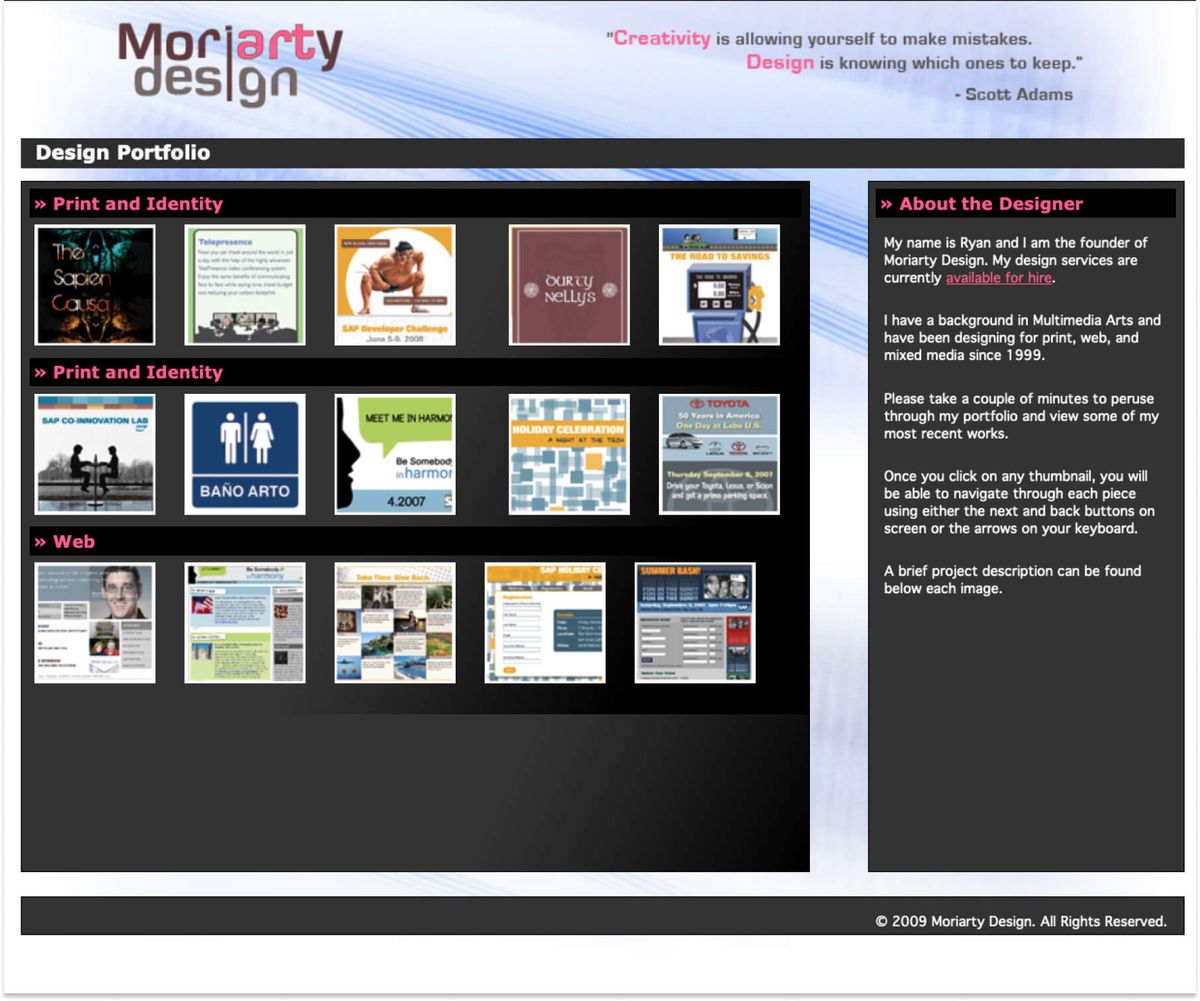
So when a project management role came up, I looked honestly at my bag of tricks, the ability to manage people, projects, relationships, and chaos, and I repositioned myself. I took the job. I became a creative project manager and account manager. It was a clear track. It made sense. You need a career. You need income. You move forward. I learned a lot about large format printing, environmental design, and physical installations. I found the complexity of problem solving in a physical space, and the nuances of managing some high velocity accounts, genuinely stimulating.
The split happened quietly and practically. Not dramatically. Not with grief. I decided that my professional life didn't need to satisfy my creative needs, that's what my personal life was for. I kept playing music. I kept recording as a solo artist. In my late twenties I picked up bass and formed a band called The Sapien Causa with some friends in San Francisco. Similar arc: great music, great fun, a pure outlet for my creative spirit, met with grand ideas from the band. Eventually I told them I didn't want to take it further than a hobby, stopped showing up, and got replaced. I had been through enough versions of that story to know how it ended.
For a while, the split worked. I was good at the job. My extra bandwidth went into my twenties in San Francisco, which were, to put it plainly, a lot of fun. The late aughts in SF still had enough of the old art and music and wild spirit to fill most evenings and weekends with endless adventures. Then I became a partner and a new father, and the bandwidth went there. The arrangement held. Professional life handled the career. Personal life handled the rest.
What I didn't fully see yet was that this was a container, not a solution. And containers have limits.
part four: the box
You show up. You do something well. You keep doing it. People start to associate you with that thing. They come to you for that thing. They plan around your availability for that thing. And slowly, without a single conversation about it, that thing becomes your ceiling.
I fought to break out. But in hindsight I wasn't fighting hard enough, or with enough clarity about what I actually was. I hadn't yet developed the internal authority to insist on being seen differently. That took time, and honestly it took some hard lessons about the cost of staying comfortable. Eventually I grew out of it, not through a single moment of confrontation but through accumulation, more responsibility, more trust earned, more willingness to name what I was actually doing and claim the scope that came with it. I learned to deploy tools and build programs and collect data and run things at a scale that couldn't be called project management anymore, no matter how convenient that framing was for someone else.
There was always an undercurrent running underneath all of it. Feeling undervalued on one side, imposter syndrome on the other. Sometimes both at the same time, which is a particular kind of exhausting. I think I put so much energy into the work itself that I never got great at advocating for what I'd actually built. And then I'd look back at everything I'd accomplished and feel the gap between that and how I was being seen, and it would frustrate me. But I was never someone who could sit in that feeling for long. My brain doesn't work that way. I'd acknowledge it, remind myself not to linger, and pivot forward. Not because I had a five year plan. More like because staying still felt worse than moving, even if I wasn't entirely sure which direction I was heading.
part five: the building i never lived in
Looking back, I was often labeled shy as a kid, and I spent a long time accepting that as true. But the older I get, the less I think it was accurate.
What was actually happening was simpler and stranger. I couldn't keep up with the speed of verbal conversation the way my peers could. The words would come fast, layered, overlapping, and by the time I had processed what was said and formed something worth contributing, the moment had passed. So I stopped trying to race it. I watched instead. I analyzed. And mostly I found other ways to fill the space. I read a lot. I got comfortable being by myself in situations most kids my age would have found unbearable. I won't pretend it wasn't lonely sometimes. But it also gave me something I didn't have a name for yet, a lot of uninterrupted time to think, to observe, to turn things over. The interior life got very rich, very early.
I'm neurodivergent. I don't lead with that professionally because it's not the point. But it's the context for almost everything I've built, and for a long time it was something I worked hard to hide.
Early on it showed up as real struggles. I would sit in meetings doing my best to listen and retain, and walk out having caught maybe 40% of what actually mattered. Handwritten notes helped a little. Not much. I learned to create structures around me that kept people from seeing how hard it sometimes was, not just to retain information, but to organize thoughts in a logical sequence when my brain hadn’t fully ingested them yet. Writing papers in school was its own particular kind of chaos. I'd work through a sentence in one paragraph, then jump ahead three paragraphs, then circle back to the beginning, then lose the thread entirely. I struggled to tell stories about myself in a linear way. Writing a resume or cover letter could take hours before I felt ready to send it.
Someone at an agency job once asked me, with genuine frustration, why I couldn't do things the same exact way every time. It stung. Not because they were wrong about what they were seeing, but because the thing they wanted from me, that predictable, step-by-step consistency, was exactly the kind of thinking my brain resists. D before E, 1 before 2, always. I could follow it if I had to. But it cost something every time.
Writing and documenting things down is how I process and how I rest. It lets me trust that the information exists somewhere outside my head so I have the option to cycle back often to check the details. I'm continuously analyzing every situation and interaction around me, sometimes to my benefit and sometimes to my detriment. I don't jump in and figure things out as I go. I observe, I map, I find the pattern, and then I move, deliberately, and all in.
The "all in" part is real. There was a stretch at a production job in San Francisco where I showed up at 9am with the day shift. Then the night shift came in. And I was still there when the night shift was leaving. My production manager pulled me aside and told me I was one of the most tenacious people she had ever encountered. I didn't know what to do with that at the time. It didn't feel like a choice. I've never been one to let anything fall through the cracks, even if it means applying all the grit and sweat and persistence necessary to pull through.
That's not healthy in isolation. The tenacity without a container becomes something else, something that costs more than it produces. Which is why one of the most important things I've learned about myself as a leader is that I need a team around me. Not because I can't carry the weight. Because the weight has to be distributed or the whole structure is at risk of falling apart.
The systems I became known for professionally didn't come from project management theory or ops best practices. They came from necessity. From a brain that required information to be documented and structured and findable, or it would slip. So I built intake processes and tiering frameworks and documented workflows, not because that's what smart ops people do, but because that's what I needed others to do in order for me to successfully function. The systems worked. For everyone. At scale.
The systems didn't arrive fully formed. I listened to how my teammates actually worked, what slowed them down, where their energy went when it should have been going somewhere else. I drew on years of doing the creative work myself, so I had a pretty good instinct for where the friction lived. And then I built around that, iteratively, testing and tweaking and adjusting as I went. I never wanted the system to feel like a burden. For the people submitting requests there was structure, because there had to be. But for the team doing the work, it stayed fluid. Flexible. The goal was always to get the process out of the way so people could focus on the actual work.
The irony I've landed on: I never follow my own systems. The processes I've built and trained others to use, I navigate around them, loosely, often in my head, operating on feel and pattern recognition. I can't repeat the same exact process over and over. My brain needs novelty to stay engaged.
I'm the architect, not the resident. I design the building, I understand every system in it, I can explain exactly how it works and why. But I don't live there. I was never building them for myself. I was building them from an empathetic distance, designing for the person who needs the guardrails I've never needed.
When the original problem is human, when it starts with how you actually process the world and not how you're supposed to, the solution tends to be more honest. More adoptable. More durable. Not because it's theoretically correct, but because it was never theoretical to begin with.
I spent years thinking the way my brain worked was something to compensate for. Something to hide, route around, build systems over so nobody noticed the gap. And somewhere along the way, the gap became the methodology.
I don't think that's a coincidence.
part six: wind in the sails
The all-in version of me is real. When the conditions are right, when there's a project that matters, a team that's firing, a sense that something could actually land, I don't hold back. I never have.
But I've also learned what happens after you give everything to something and watch the outcome land with a thud. Or get absorbed quietly into the noise. Or just not matter the way you thought it would. Eventually you start reading the signals earlier. You recognize the pattern forming and something in you scales back before you've even made a conscious decision to.
Being attuned like that has protected me more than once. It's also probably kept me from blindly jumping into things that would have been genuinely good. I can't always tell which one it is until I'm already on the other side of it.
The same instinct that keeps me from walking into walls also keeps me, sometimes, from walking through doors.
Which is exactly why the people around you matter so much. Not just to share the load, but to see what you can't always see yourself. The trusted few who can tell the difference between your pattern recognition working for you and working against you. You can be the most self-aware person in the room and still need that. Maybe especially then. The whole is always greater than the sum of its parts, and I've learned that the hard way enough times to finally believe it.
part seven: the long way around
I did not take a straight path here. I went wide before I went deep. I made lateral moves that looked like retreats. I built expertise in areas I backed into rather than chose. I kept one version of myself alive in my personal life while a different version showed up for work, and for a long time I called that a reasonable arrangement.
I know how creative work feels from the inside. The 2am recording sessions. The EP that ripped and never got played live. The campaign that landed and the one that got absorbed into the noise. The systems built at midnight because the morning meeting couldn't wait. All of it.
None of that would exist if I had picked a lane at that lunch in Palo Alto.
Which brings me to the question I keep circling: why am I still trying to fit into boxes?
The job market is brutal right now. I know this. I have a family that depends on me and I'm not naive about what that means. I'm not writing this from a place of financial comfort or easy optionality. I'm writing it from the middle of a real job search, submitting applications, rebuilding a portfolio, repositioning myself for roles that feel like close fits but not exact ones.
And underneath all of that activity is a question that won't go away: is the goal to find the right box, or to stop looking for boxes altogether?
I could give you proof points. The campaigns, the numbers, the teams, the programs. I've done a lot and I'm proud of it. But that's not really what this is. That's not why I wrote it.
What I wanted was the space in between. The part that doesn't show up on a resume or a portfolio. The doubts. The moments where the energy came roaring back from somewhere unexpected. The memories of genuinely cool things, not as line items but as experiences, as feelings. The version of me that isn't a machine optimizing toward the next accomplishment.
I think the person in between the proof points is worth knowing. And I've spent enough time keeping him to myself.